|
Picking out pregnancy-safe skincare can seem complicated. I have an entire page on pregnancy beauty dedicated to which skincare ingredients to avoid during pregnancy, breastfeeding, or IVF.
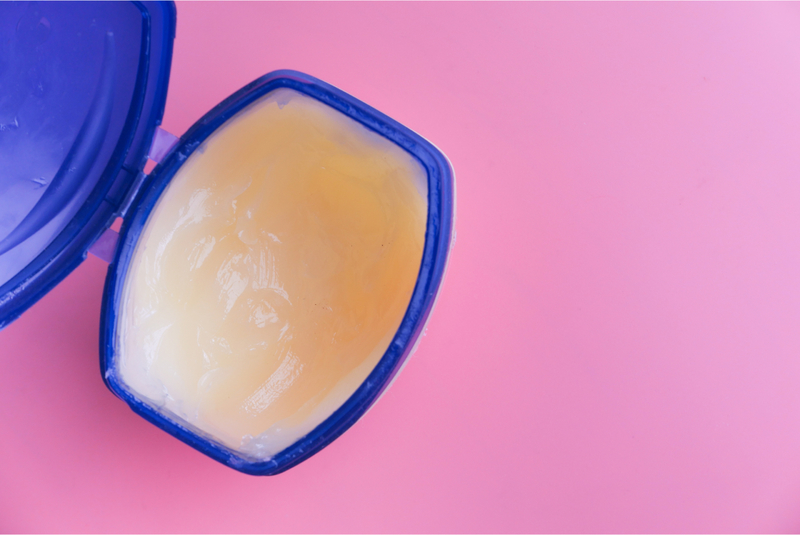
Today is about petrolatum (petroleum jelly, popularly known as Vaseline) and its safety during pregnancy.
Vaseline or petroleum jelly is a commonly used ingredient in personal care products and has been around for as long as you can remember. Derived from petroleum, it is cheap, abundantly available, and a highly effective skin protectant.
A petroleum byproduct, it also happens to have a bad rep in the skincare industry, due to which many brands now do not use it in their line and even make a note of that with pride.
Does it deserve this bad reputation, or has it simply drowned in this neo-age of natural or nature-derived skincare? Is petroleum jelly or Vaseline pregnancy safe?
Quick Navigation
Concern with Petrolatum. Refined vs Unrefined.
Is Petroleum Jelly Pregnancy or Nursing Safe?
How To Know If a Petroleum Jelly Is Refined?
The Best Way to Effectively Use Petroleum Jelly.
A Word On ‘Slugging’.
Trivia.
Concern with Petrolatum. Refined vs Unrefined.
Petroleum jelly, also known as petrolatum, paraffin jelly, soft paraffin, or mineral oil jelly, is derived from crude oil or unrefined petroleum as a byproduct. This unrefined petrolatum has impurities like PAH (Polycyclic Aromatic Hydrocarbons) that are potentially carcinogenic and are used for industrial purposes like machine lubricants or shoe polishes.
When refined, all these impurities are removed, and what you get is an odorless, tasteless, smooth, white or off-white, translucent cosmetic and medical-grade petroleum jelly that is safe to use in skincare.
This distinction is important- only refined petroleum jelly is used in skincare and medicine, and only this form is considered safe during pregnancy and breastfeeding.
Here is a concise video on how this refining happens:
Is Petroleum Jelly Pregnancy or Nursing Safe?
Yes, as long as it is refined.
The primary concern with using petroleum jelly is contamination with PAHs.
The National Toxicology Program states that PAHs are ‘reasonably anticipated to be human carcinogens based on sufficient evidence of carcinogenicity from studies in experimental animals.’ A review article of 2022 found that PAH exposure is linked to malignancies in multiple organ systems and also to cardiovascular diseases.
Note that petroleum jelly in skincare, per se, does not impact fertility like phthalates can or have teratogenic potential, like retinoids– the concern here is the carcinogenic potential of unrefined petroleum jelly that can impact across all age groups and life stages.
How To Know If a Petroleum Jelly Is Refined?
Refined petroleum jelly is white or off-white in color and is odorless and tasteless (unless the product has added fragrance and flavors). Lesser refined (yellow, amber, brown) versions are used in industries, like for shoe polish, and contain impurities (INCHEM) and should not be used on the skin.
|